

Embark on a journey to explore the realm of automating complex business processes for maximum efficiency. This guide is designed to provide insights, strategies, and tools to streamline operations and enhance productivity.
As we delve deeper into the intricacies of automation in business processes, we uncover a world of possibilities that can revolutionize the way organizations operate.
Importance of Automation in Business Processes
Automation plays a crucial role in maximizing efficiency in complex business processes by streamlining operations, reducing manual tasks, and minimizing errors. By implementing automation, businesses can significantly improve productivity, reduce costs, and enhance overall performance.Examples of Industries Benefiting from Automation
- Manufacturing: Automation in manufacturing processes such as assembly lines has led to increased production speed, improved product quality, and reduced waste.
- Finance: Automation in financial institutions for tasks like data entry, transaction processing, and report generation has improved accuracy, reduced processing time, and minimized human errors.
- Healthcare: Automation in healthcare facilities for appointment scheduling, patient records management, and billing processes has increased efficiency, enhanced patient care, and reduced administrative burdens.
Benefits of Automation
- A cost-saving measure: By automating repetitive tasks, businesses can reduce labor costs, minimize human errors, and optimize resource allocation.
- Time efficiency: Automation allows for faster processing of tasks, quicker response times, and improved overall workflow, leading to increased productivity and faster delivery of services.
- Error reduction: Automation helps eliminate manual errors, ensures consistency in processes, and improves accuracy, resulting in higher quality outputs and better customer satisfaction.
Identifying Complex Business Processes for Automation
Identifying the right business processes to automate is crucial for maximizing efficiency and productivity within an organization. By focusing on complex processes that are repetitive and time-consuming, businesses can streamline operations and free up valuable resources for more strategic tasks.Criteria for Selecting Processes for Automation
- Complexity: Look for processes that involve multiple steps, decision points, or dependencies that can benefit from automation.
- Repetitiveness: Identify tasks that are performed frequently and consistently, as these are prime candidates for automation to reduce manual effort.
- Scalability: Consider processes that need to handle a large volume of work or data, as automation can ensure accuracy and speed even as the workload increases.
- Criticality: Prioritize processes that are essential to the core functions of the business, as errors or delays in these areas can have a significant impact on overall operations.
Importance of Analyzing Existing Workflows
Before implementing automation, it is crucial to analyze existing workflows to understand the intricacies of each process. This analysis helps in identifying bottlenecks, inefficiencies, and areas where automation can make the most impact. By gaining a comprehensive view of how tasks are currently performed, businesses can design automation solutions that address specific pain points and optimize the overall workflow.Tools and Technologies for Automating Business Processes
Automation tools and technologies play a crucial role in streamlining complex business processes, increasing efficiency, and reducing human errors. Let's explore some popular tools and platforms used for automating business processes.Popular Automation Tools and Technologies
- 1. Robotic Process Automation (RPA): RPA software bots mimic human actions to automate repetitive tasks across multiple systems.
- 2. Business Process Management (BPM) Software: BPM software helps in designing, executing, monitoring, and optimizing business processes.
- 3. Workflow Automation Tools: Workflow automation tools streamline tasks and processes by automating them based on predefined rules.
- 4. Integration Platform as a Service (iPaaS): iPaaS enables the integration of different applications and systems to automate data flow and processes.
Scalability and Customization of Automation Platforms
- Automation platforms differ in terms of scalability and customization options. RPA is highly scalable and customizable to fit various business needs, while BPM software offers a structured approach to process automation.
- iPaaS provides scalability through cloud-based integration and customization through configurable integrations with different systems.
Integration of AI and Machine Learning in Automation
- AI and machine learning technologies are increasingly being integrated into automation tools to enhance decision-making, predictive analytics, and process optimization.
- AI-powered bots can intelligently handle unstructured data, learn from patterns, and continuously improve process efficiency.
- Machine learning algorithms can analyze large datasets to identify trends, anomalies, and opportunities for process improvement.
Designing an Effective Automation Strategy
Creating a comprehensive automation strategy is crucial for the successful implementation of automated business processes. It involves several key steps and considerations to ensure maximum efficiency and effectiveness.Mapping Out Automation Workflows and Dependencies
When designing an automation strategy, it is essential to map out the workflows and dependencies of the processes that are being automated. This involves identifying the sequence of tasks, inputs, outputs, and decision points within each process. By understanding the flow of work and the interactions between different components, you can determine the most efficient way to automate these processes.- Identify the key processes: Start by identifying the business processes that are most suitable for automation. These processes should be repetitive, rule-based, and time-consuming.
- Analyze workflows: Break down each process into individual tasks and steps. Identify the inputs, outputs, and dependencies between these tasks.
- Define automation points: Determine where automation can be introduced within the workflows to streamline the process and eliminate manual intervention.
- Map dependencies: Understand the relationships between different tasks and processes to ensure that automation is implemented in a logical and efficient manner.
Setting Clear Objectives and KPIs
Setting clear objectives and key performance indicators (KPIs) is essential for measuring the success of automation efforts. This provides a framework for evaluating the impact of automation on business processes and helps in identifying areas for improvement.- Define objectives: Clearly define the goals and objectives of automation, such as reducing processing time, improving accuracy, or increasing productivity.
- Establish KPIs: Identify key metrics that will be used to measure the performance of automated processes, such as cycle time, error rates, or cost savings.
- Monitor progress: Regularly monitor and evaluate the performance of automated processes against the established KPIs to track the effectiveness of automation efforts.
- Iterate and improve: Use the insights gained from monitoring KPIs to identify areas for improvement and optimization in the automation strategy.
Implementing Automation Solutions
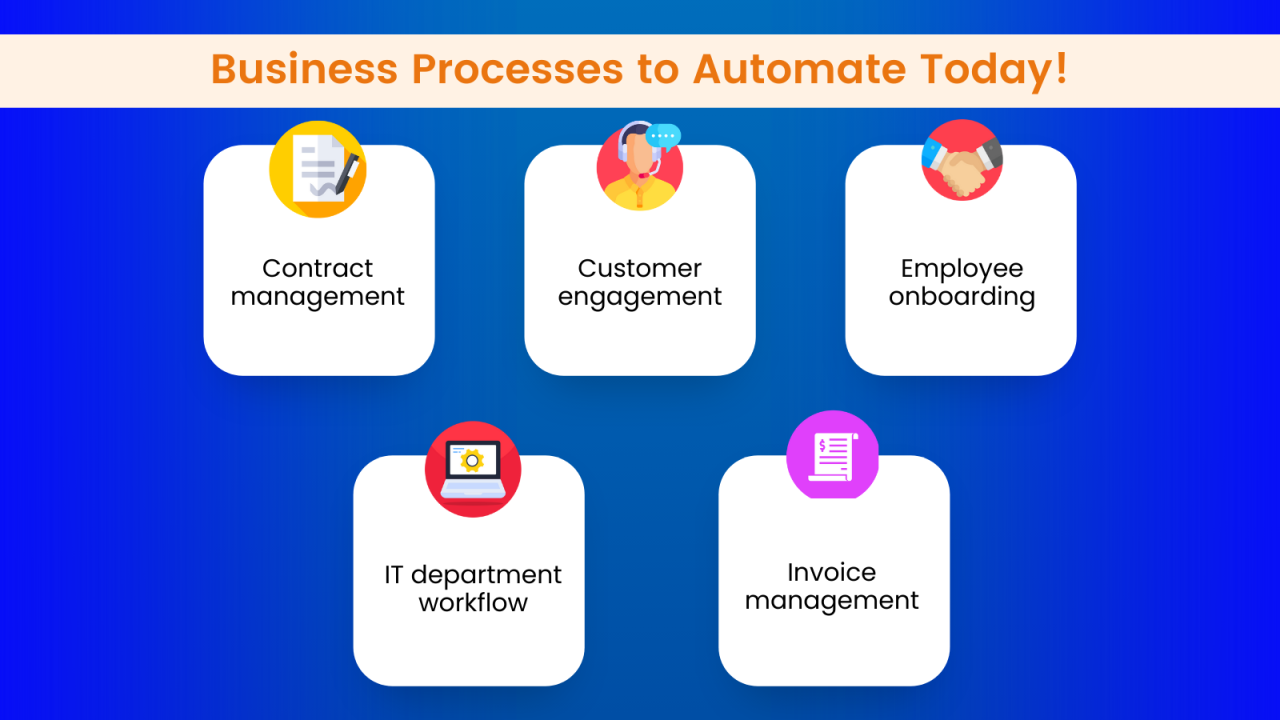 Automating complex business processes requires a strategic and phased approach to ensure a successful implementation. This involves careful planning, testing, and validation of automated processes before full deployment, along with effective change management to facilitate a smooth transition.
Phased Implementation Approach
Implementing automation in a phased approach allows organizations to gradually introduce automated solutions while minimizing disruptions to existing workflows. The process typically involves the following steps:- Assessment: Evaluate current business processes to identify areas that can benefit from automation.
- Pilot Phase: Implement automation in a small-scale pilot project to test the effectiveness of the solution.
- Refinement: Gather feedback from stakeholders and make necessary adjustments to optimize automated processes.
- Full Deployment: Roll out automation on a larger scale once the pilot phase is successful and stakeholders are onboard.
Best Practices for Testing and Validation
Testing and validating automated processes are crucial steps to ensure that the automation solution works as intended and delivers the expected results. Some best practices include:- Set clear objectives and success criteria for automated processes.
- Conduct thorough testing in a controlled environment to identify and address any issues.
- Involve stakeholders in the testing process to gather feedback and ensure alignment with business goals.
- Document test results and performance metrics to track the effectiveness of automated processes.
Role of Change Management
Change management plays a vital role in guiding employees through the transition to automated workflows and ensuring a smooth adoption of new processes. Key aspects of change management include:- Communication: Clearly communicate the benefits of automation and provide training to help employees adapt to new ways of working.
- Stakeholder Engagement: Involve key stakeholders in the decision-making process and address any concerns or resistance to change.
- Continuous Support: Offer ongoing support and resources to help employees navigate the transition and overcome any challenges.
- Monitoring and Feedback: Monitor the impact of automation on employees and workflows, and solicit feedback to make continuous improvements.
Final Conclusion
In conclusion, mastering the art of automating complex business processes unlocks a path to unparalleled efficiency and success. By implementing the right tools and strategies, businesses can pave the way for a future where automation drives growth and innovation.
FAQ Summary
How can automation benefit complex business processes?
Automation streamlines repetitive tasks, reduces errors, and saves time, leading to enhanced efficiency and productivity.
What factors should be considered when selecting processes for automation?
Complexity, frequency, and potential impact on operations are key criteria to evaluate when choosing processes for automation.
What role does AI and machine learning play in automating business processes?
AI and machine learning technologies can optimize decision-making, predict outcomes, and improve the efficiency of automated processes.